



























Why nicotine pouch ranges change over time
Products vanish, strengths shift, flavours get renamed. The ordinary market forces behind changing nicotine pouch ranges — and how to adapt when a favourite goes.
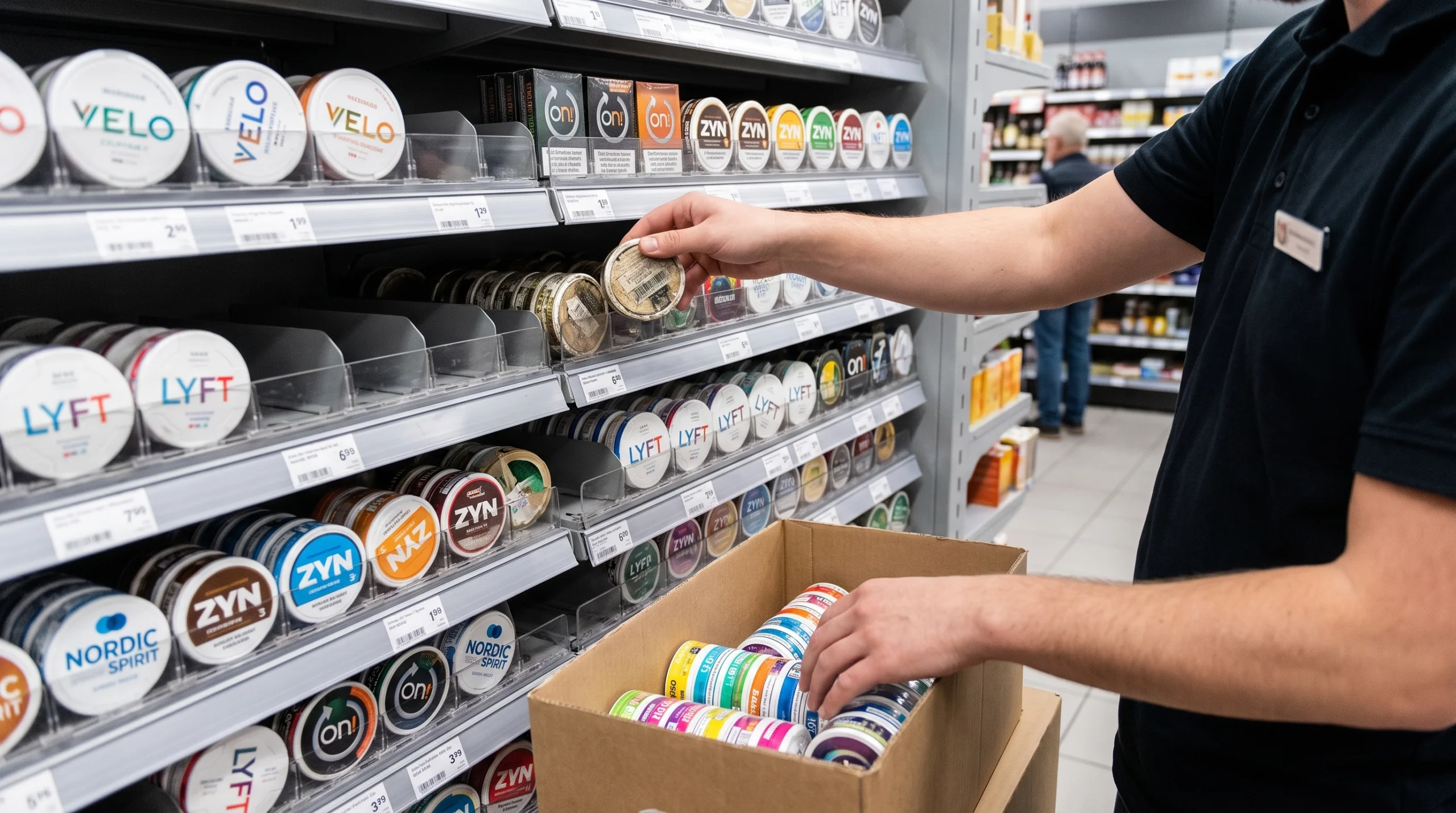
Sooner or later it happens to every pouch user: the product you always buy is gone, renamed, reformulated or replaced by something almost-but-not-quite the same. Range churn feels personal, but it is the ordinary metabolism of a young, fast-moving category. This explainer covers the forces that reshape ranges — and the practical playbook for when your favourite disappears.
The forces behind range churn
- Portfolio pruning. Shelf space and production lines are finite. Slow sellers get cut so volume products can run — the least dramatic and most common reason a flavour vanishes.
- Reformulation. Recipes are tuned continuously: moisture, sweetness, cooling, pouch material. Sometimes the update is announced; often the can simply changes and the taste follows.
- Regulatory adjustment. Rules on strength ceilings, labelling or flavours differ by country and evolve — and when they change, ranges change with them, market by market. Why rules vary that much is its own story, told in why nicotine pouch rules differ by country.
- Rebranding and renaming. Names and designs get harmonised across markets, which can make a continuing product look discontinued. The contents may be identical under a new coat.
- Competitive positioning. New strengths and families appear where competitors have proven demand; ranges expand toward whatever the market is rewarding this year.
Reading a range change like a user, not a fan
When a range shifts, three questions cut through the noise. Did the product change, or the packaging? Compare the printed facts — strength, format, count — using the can-reading checklist; if they match, it may be the same product dressed differently. Did the recipe change? Only your own back-to-back comparison answers that. Did the market change? If a whole strength tier disappeared locally, that pattern usually points beyond one brand’s decisions.
When your product disappears: the playbook
- Identify what you actually valued — the strength, the format, the flavour family, or the specific execution. Usually it is one or two of those, not all four.
- Map the spec to the current market. Same strength band, same family, same format — the systematic comparison method in how to compare brands and ranges exists for exactly this moment.
- Test two candidates, not one. A single replacement colours your judgement; two give you a comparison.
- Resist the stockpile instinct. Pouches age; a cupboard of a discontinued product is a slow goodbye, not a solution.
Churn is a health sign — mostly
A range that never changes belongs to a category nobody is investing in. Steady iteration — better pouch material, clearer labels, more sensible strength steps — is what a competitive market looks like from the shelf. The user’s job isn’t to stop the churn; it’s to stay legible to yourself: know your spec, read cans well, and let products compete for you rather than the other way round.
Key takeaways
- Ranges change through pruning, reformulation, regulation, rebranding and competition — mostly ordinary market forces.
- Always separate packaging changes from product changes before mourning a favourite.
- Know your spec (strength, format, family) — it makes any replacement search systematic.
- Don’t stockpile discontinued products; pouches are perishable.