
























Slim, mini and regular: nicotine pouch formats explained
Pouch size changes comfort, discretion and feel more than most people expect. What slim, mini and regular formats actually mean, and how to pick yours.

Strength gets the attention, flavour gets the marketing — but format, the physical size and cut of the pouch, quietly decides how the whole experience feels. A pouch that fits your lip well disappears; one that doesn’t nags at you for forty minutes. This guide explains the three established formats and how to choose between them.
The three formats at a glance
| Format | Shape | Discretion | Typical pairing |
|---|---|---|---|
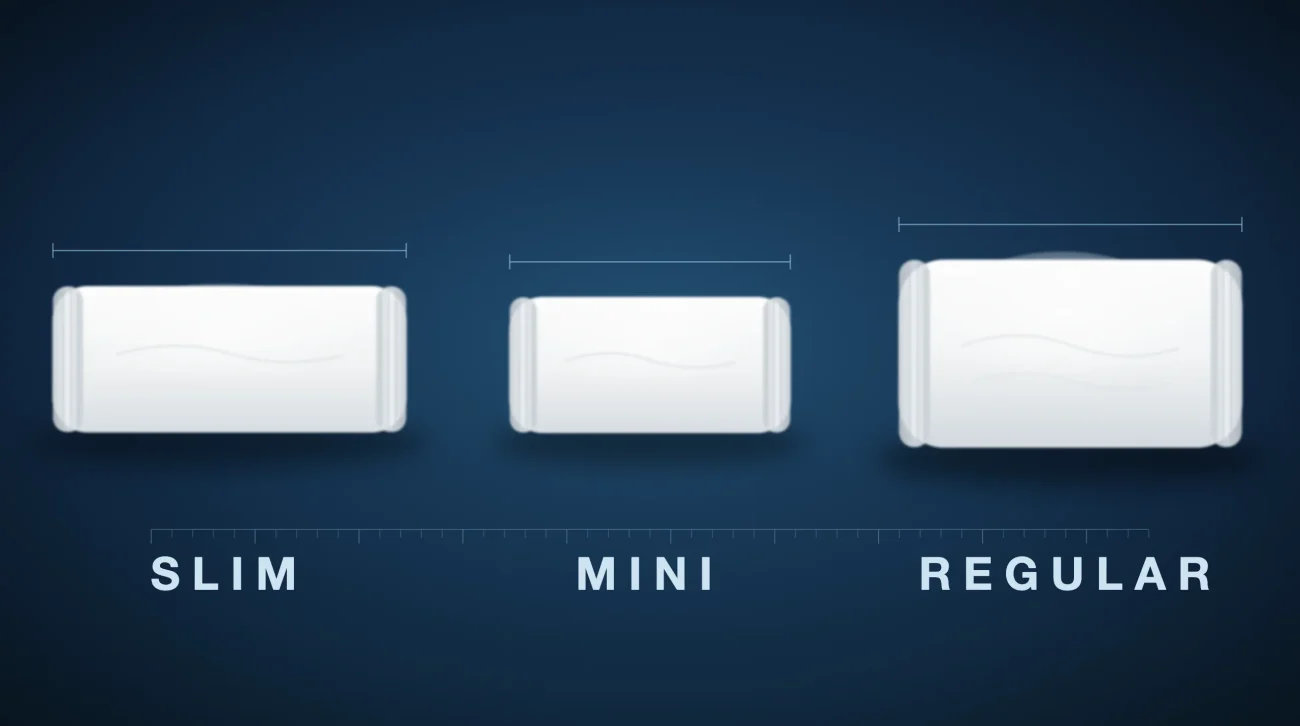
| Slim | Long, narrow, flat | High — follows the lip line | The modern default across all strengths |
| Mini | Short and compact | Highest — nearly invisible | Often lighter strengths and new users |
| Regular | Fuller, wider traditional cut | Moderate — more presence under the lip | Experienced users who want body and longer release |
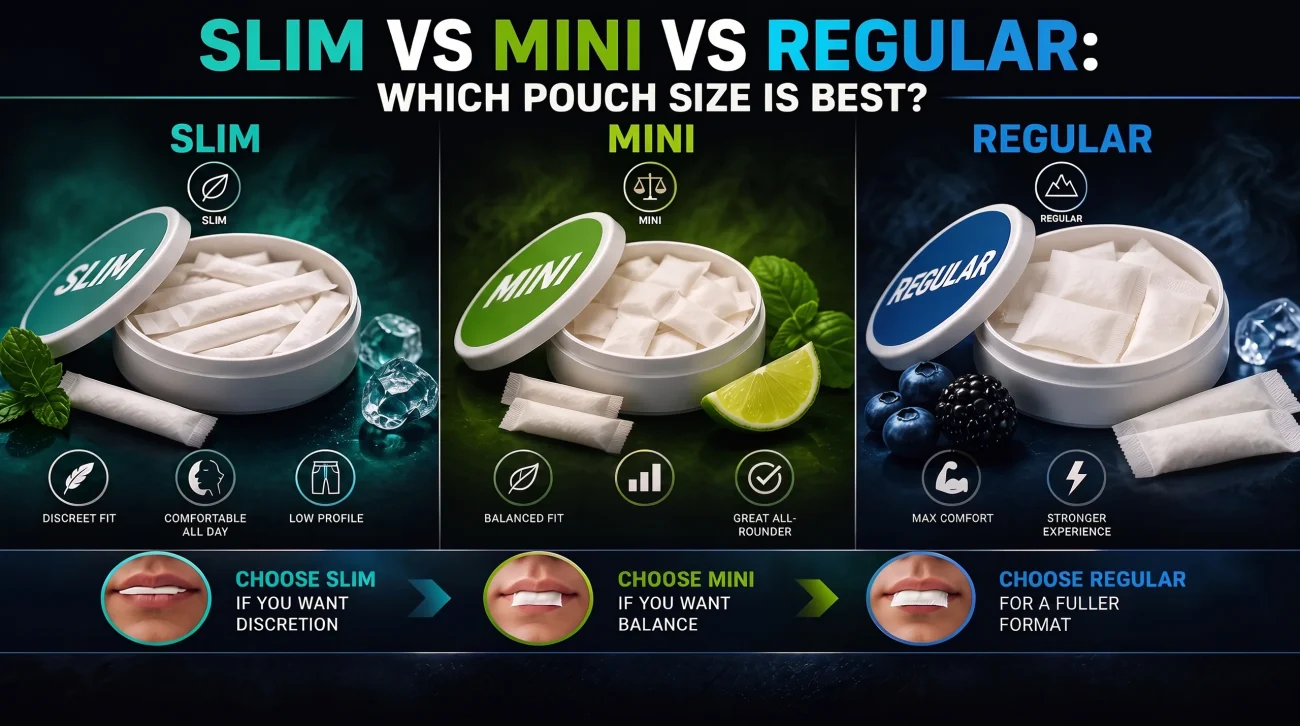
Slim: the modern default
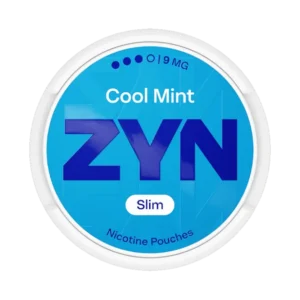
The slim format is where most of the category has settled. The long, narrow cut follows the natural line of the upper lip, which makes it comfortable for most mouths and hard to spot from the outside. If you are choosing a first pouch and don’t want to think about format at all, slim is the safe answer — which is exactly why our choosing guide treats it as the starting assumption.
Mini: maximum discretion
Mini pouches trade contact area for invisibility. They are shorter and lighter than slim pouches, sit almost unnoticeable under the lip, and suit situations where discretion is the whole point. Because a smaller pouch carries less material, minis are often — not always — found at the lighter end of the strength scale, and many new users find the small size less intrusive while they get used to the sensation. The trade-off is a subtler, sometimes shorter experience.
Regular: the traditional cut
The regular (sometimes “large” or “original”) format is the fuller cut the category inherited from its Nordic oral-tobacco ancestry — a wider pouch with more body and more contact area. It is more noticeable under the lip and that is partly the point: users who prefer regular tend to describe it as more substantial, with flavour and release that feel more present across the session. The format’s deeper history is a story of its own, told in how formats and packaging have evolved.
Does format change strength?
Not the number — a 6 mg pouch is 6 mg in any format. But format changes how that number feels: contact area and pouch weight affect release, and the same dose in a mini can feel quicker and sharper than in a regular. If you switch formats and the experience shifts, the strength didn’t change — the delivery did. The mechanics behind that are covered in understanding nicotine pouch strength and the measurement side in mg per pouch vs mg/g.
Choosing yours
- Unsure? Slim. It is the format the most products are designed around.
- Discretion above all? Mini — meetings, travel, anywhere you’d rather nobody noticed.
- Want more presence? Regular, once you know you like the category.
- Still deciding? Format preferences are cheap to test: one can of each teaches you more than any guide.
Key takeaways
- Slim is the mainstream default; mini maximises discretion; regular offers the fullest feel.
- Format never changes the milligram number, but it does change how the dose feels.
- Match format to situation: discretion, comfort and presence are the real variables.