




























mg per pouch vs mg/g: what is the difference?
Two conventions describe nicotine pouch strength — milligrams per pouch and milligrams per gram. Here is how each works and how to convert between them.
Quick answer
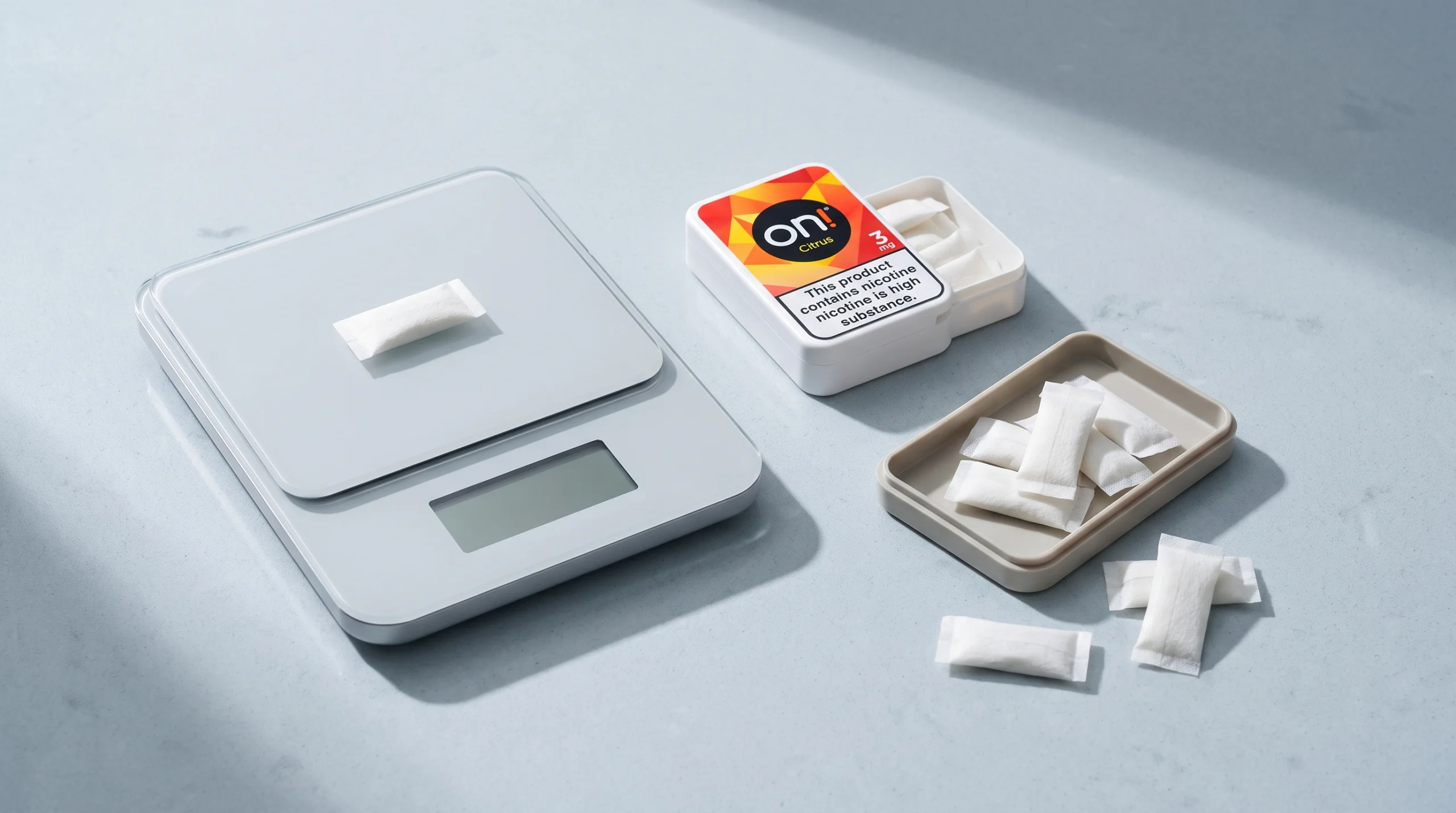
mg per pouch is the nicotine in one pouch — the number that matters when comparing products. mg/g is a concentration: nicotine per gram of pouch material. To get from concentration to dose you also need the pouch’s weight: mg per pouch = mg/g × pouch weight in grams.
Nicotine pouch strength is written two different ways, and mixing them up makes products look far stronger or weaker than they are. This short explainer pins down both conventions and shows the arithmetic with a worked example.
mg per pouch: the dose
This is the convention modern cans lead with, and the one PouchPick uses everywhere: total milligrams of nicotine in each individual pouch. It answers the only question a user actually has — how much nicotine am I about to use? — and it makes products directly comparable regardless of pouch size.
mg/g: the concentration
Milligrams per gram describes how densely the pouch material carries nicotine, without saying anything about how big the pouch is. It is a manufacturing-style measure: precise about the blend, silent about the dose. A high-concentration mini pouch and a lower-concentration regular pouch can deliver exactly the same nicotine per pouch.
The conversion, worked through
The link between the two is simply the pouch’s weight:
| Concentration | Pouch weight | Nicotine per pouch |
|---|---|---|
| 10 mg/g | 0.5 g | 5 mg |
| 10 mg/g | 0.8 g | 8 mg |
| 20 mg/g | 0.5 g | 10 mg |
Note what the table shows: the same 10 mg/g concentration produces a 5 mg pouch or an 8 mg pouch depending purely on pouch weight. Concentration alone cannot tell you strength — which is why comparing a can labelled in mg/g against one labelled per pouch, digit against digit, goes wrong.
Common misunderstandings
- “Higher mg/g always means stronger.” Only at equal pouch weight. A big low-concentration pouch can out-deliver a small high-concentration one.
- “The big number on the can is always per pouch.” Usually, on modern packaging — but check the unit. If it says /g, it is a concentration.
- “Doubling pouch weight doubles the experience.” It doubles the content; release speed and feel depend on construction and format too, as covered in the strength guide.
Where does pouch weight come from? Sometimes the can states it; often it doesn’t, which is one more reason per-pouch labelling has become the norm. Everything a can does print, and where to find it, is covered in how to read a nicotine pouch can.
Key takeaways
- mg per pouch = dose; mg/g = concentration. Only the dose compares products directly.
- mg per pouch = mg/g × pouch weight — without the weight, mg/g tells you nothing about strength.
- When two cans use different conventions, convert before comparing; never compare the raw digits.